Ron Querry
  • About
  • Get In Touch
  • Books
  • Photo Album
  • Archives
  • Musings
  • Interviews
  • Good Links

Some Early Memories

4/6/2013

4 Comments

 
My earliest memories are of my mother and me living alone.  I can recall the strong smell of bleach and the hot, wet air at the laundry where we walked to wash clothes or have them washed.  The smell of the red oil that the man in the barber shop rubbed on my head—how his clippers often pulled my hair painfully.  Of my mother and me waiting on cold mornings to board public transportation—busses and street cars—and of me wondering (and asking her, although I do not recall an answer if there was one) why we had to stand up when there were clearly empty seats at the back of the car.  I remember that there were drinking fountains that I was not supposed to drink from and imagining that the unconsumed water from the “White Only” fountains, after mixing with spit and swirling across the discarded wads of gum and cigarette butts that I found so disgusting, went down a pipe and then came up in the “Colored” fountains.

These are my earliest memories.  This was Oklahoma City in the year 1948.

My mother married a man seventeen years her senior named Ben William Querry in, I think, 1949.  My earliest memories of him include my mother and me together high in a gondola of a Ferris Wheel rocking it wildly and laughing because Ben Querry—alone in the gondola behind us was hollering for us to stop.  I couldn’t do that today, so anxious am I about heights.  And I remember a kitchen with a table in the middle where we were seated to eat supper and my mother throwing a serving dish or casserole and hitting the refrigerator—our supper running in clumps down to the linoleum floor.  I do not recall what angered her so.  I know I was six years old when, later, my half-sister, Ann Marie was born—I remember riding in the back of an ambulance with my mother and Ann Marie when they were brought home from the hospital, the streets of Oklahoma City that day being icy and dangerous.  I was seven when half-brother Christopher Lynn came along, his first trip home less memorable.

I cannot recall a time when I did not want to write.  And while I have vague memories of my mother reading to me, another of my earliest clear memories is of coming home from school and reading to my mother in that odd way in which one first read in those days:

“Look.  Look.  See Spot.  See Spot run.”

The first story I ever wrote that was published appeared in 1959 in the magazine section of the Sunday Oklahoman newspaper.  I was sixteen-years-old (a fact that I withheld from the editors at the Oklahoman) and I was paid seventy-five dollars for that piece.  They illustrated my work and it was the cover story.  It was a very long time, you may be sure, before I was again paid seventy-five dollars for anything I wrote.

I suppose it was easier at the time that I go by the name Querry as soon as my mother was married.  It was not until I was about to graduate high school—I had enlisted in the Marine Corps and its rules dictated that I had to go by my “real” name—that Ben Querry went through whatever paperwork was required to formally and legally adopt me.  I don’t recall that I cared one way or another—the fact is, I never cared all that much for the man—but it made it all easier than having to explain and adjust records to reflect that I had been named, at birth, Ronald Downer Burns.  I believe I can recall seeing  a birth certificate that listed me as Ronald Downer Burns and my father as Woody Burns.  Perhaps I imagined it.  I have a “Birth Certificate” testifying to the fact that I was born in Washington, D.C., on March 22, 1943, to Beverly Querry (no middle name) (all true), and Ben W. Querry (not true).  An official document that, essentially, lies.  I still don’t understand how that works.

When he died, Ben Querry’s last will and testament stated that, as I was not his offspring, nothing whatsoever of his estate was to be left to me.  And, as an aside, I’ll tell you that the man whom my mother married some years later stipulated in his will that I was to receive an equal share of his estate divided among his five adult children by a previous marriage and my mother’s three adult children whom he, of course, had never adopted.  His name was James Corbett, and I wish I’d been kinder to him while he was alive.  Not that I was unkind, just impatient, I think.  Jim liked to listen (and talk back) to talk radio hosts the likes of Rush Limbaugh.  He thought Richard Nixon was just a fine president.

But as I said, I officially and legally became Ronald Burns Querry when I joined the Marine Corps.

I flew out of Oklahoma City for boot camp in San Diego, California, on August 3, 1961.  An underlying principal of the United States Marine Corps is summed up in the oft- repeated saying: “Once a Marine, Always a Marine.”  If that is the case—and I believe it is—then I have been a Marine for more than fifty years.  I was/am a Rifleman (MOS 0311).  I served on Active Duty for slightly less than three years (I applied for an early release in order to begin my freshman year at San Francisco State College—the Commandant of the Marine Corps at the time, General David M. Shoup, granted me that early release for what was termed the “Convenience of the Government”).  I had only one permanent duty station while I was on active duty.  I was stationed aboard the aircraft carrier U.S.S. Coral Sea (CVA 43) for two years, two months, and twenty-two days where I served variously as brig guard, Commanding Officer’s and Executive Officer’s orderly and driver, nuclear weapons guard, Sergeant-of-the-Guard, and shore patrolman in Japan.  I was released from active duty on July 20, 1964 with a lump-sum payment of $84.40, thank you very much.  A Non-Commissioned Officer, I had achieved the rank of Corporal (E-4) in under two years.  I never heard a shot fired in anger, nor did I ever fire a shot at anyone.  I was awarded the Good Conduct Medal, an “E” (for Efficiency) as a gun crew member aboard the USS Coral Sea that was awarded me by the U.S. Navy, and a fancy certificate stating that I had, at precisely high noon on 22 April 1963, crossed the Equator exactly at the 180th Parallel and thus could proclaim myself a “Golden Shellback—a rare title reserved expressly for those few seafaring men courageous and skillful enough to direct themselves to this precise location on the surface of the earth.”  (This was, of course, before the widespread and common use of handheld Global Positioning devices—there’re probably a lot of people who could find that spot today.)  I possess no other government-issued medals, ribbons or commendations.

Picture
My release date was exactly sixteen days before the “official” start of the Viet Nam War—which is to say, had I been released sixteen days later than I was, I would be considered a “Viet Nam Veteran.”

I consider my time of active duty in the Marine Corps to have made up a significant and crucial part of my life.  As I said, I knew no father and so believe, to this day, that—while later than most of my generation, to be sure—most everything I learned about honor, loyalty, and truth, I learned as a United States Marine.

4 Comments

Miss Molly Ivins

3/29/2013

6 Comments

 
I'm remembering an occasion in, I think 1983, when my friend Kirk Purcell invited me to what he described as an annual event. Kirk Purcell was a Rodeo Clown-turned-Texas personal injury lawyer I admired. Walk Tall America Night was the yearly coming together of a large group of (mainly) personal injury lawyers and writers and entertainers and a lampshade salesman—this latter individual’s place in the group I never quite understood.

Anyway, Walk Tall America Night was billed as “An Evening Dedicated to the Memory of Sheriff Buford T. Pusser,” the late sheriff of McNairy County, Tennessee, who you may recall, before his tragic death in a fiery crash of his Corvette automobile in 1974, gained wide fame as the subject of the movie Walking Tall and the sequels, Walking Tall: Part 2, and Walking Tall: The Final Chapter.  Sheriff Pusser was a clean-cut All-American Hero who had been a high school football star, a professional wrestler, and had attended mortician’s school.  During his career in law enforcement, he was said to have been shot eight times, knifed seven times, killed two individuals and destroyed upwards of eighty-seven whiskey stills.  He is supposed to have once fought six men at one time, sending three to the hospital and three to jail.  And all this from a man who had been discharged from the United States Marine Corps on account of his asthma.

The highlight of Walk Tall America Night—which was staged in an upstairs barroom and dance hall called The Friendly Club on Magnolia Street in a somewhat run-down section of Fort Worth—was the awarding of the coveted Buford T. Pusser Tall Walker of the Year Big Stick Award.  The award itself consisted of a gold (painted) plaster-of-Paris bust of Elvis and a commemorative axe handle.  The bust of Elvis was to be kept and proudly displayed by the Honoree for the year of his/her tenure and then returned to be awarded to the next year’s winner—I’m guessing that such a treasured object could not be duplicated.  The commemorative axe handle—available at the Sheriff Buford Pusser Home & Museum & Gift Shop in Adamsville, Tennessee, for $15 (plus $15 shipping and handling) or at any feed or home improvement store—was the winner’s to keep in perpetuity as a reminder of the honor.

As I recall, admission to the gala event was a “$5 Love Offering.”

The 1983 Award went to Austin attorney Broadus Spivey and his wife Ruth Ann (a former cheer leader from Clarendon, Texas), neither of whom claimed to have any idea of why they were selected.  (A former recipient (1979), the late Buck Ramsey of Amarillo, reported that some years “they can’t find anyone to accept the award” and that he himself had been honored only because he couldn’t get in touch with anyone in time to decline it.)  Other past-recipients of the award include singer/songwriter-mystery author and soon to be gubernatorial candidate Kinky Friedman (1978), and Rodeo Clown Quail Dobbs (1981).

What especially pleased me, however, was the fact that one of my All Time Favorite American Heroes, Miss Molly Ivins had been the previous year’s winner (during the presentation of which she had been called a “World Famous, Fearless, Spirit-Filled Teller of Truth”) and so was in attendance to return the bust of Elvis.  Careful research later led me to materials that indicated that “because of Sister Molly’s unsavory journalistic background,” the Board of Deacons for the Anti-UnAmericanism Crusade who were in charge of selecting honorees, “finally had to waive the morals test altogether.”  I learned, as well, that among that year’s semi-finalists were Porter Waggoner, Senator Jesse Helms, and the Reverend Jerry Falwell.

The evening was as interesting as you're probably thinking.  I confess I was a little surprised that no one was arrested or brutally mugged the entire evening—at least as far as I was able to discern.  There were a couple of cosmic cowboys up from San Angelo who had towed a 1959 Cadillac outfitted with steer horns and a Texas flag in the hope of winning the “Best Float Award.”  They wore tuxedo tops with their jeans, boots, and spurs and got down when Tommy Hancock and the “Supernatural Family Band” played rock and roll.

I remember later that night we were each sipping on a Pearl Beer when Miss Molly Ivins asked me was I a lawyer.  I looked up at her (she was a long drink of water, you know) and told her, no, that I was trying to be a writer.  It was then, somewhere during that conversation on a barroom dance floor, that Miss Molly Ivins proclaimed me to be a Freedom Fighter—a title I have always held dear and striven to live up to.

Several months later, in an especially lonely and likely boozy mood in my little adobe house on the banks of the Pecos River back in New Mexico, I wrote Molly Ivins a letter.  I quote here the letter in its entirety, exactly as written:

Dear Miss Molly,
     You are my favorite living arther next to William Shakespeer. As you can see from my return address in the upper right hand corner of this letter I live in New Mexico and not in Texas. But I hope that won’t stop you from reading this letter. I always look forward to reading your collum whenever the Sunday paper comes. Its the only reason I prescribe to the Sunday Dallas Times Herald and I have to pay top dollor to have it sent to me all the way in New Mexico because the Allsups in Santa Rosa which is the closest town only has the Albuquerque Sunday paper and I think those jerks who write that “rag” are all republicans if you know what I mean.
     I really like that pitcher of you that is always on your collum in fact I cut one of them out and tapped to my icebox. I hope thats OK with you? The reason I’m writing to you is to see if you would send me a autographed one of you (it don’t have to be the same one if they need to keep using it down at the Dallas Times Herald.) You probly dont remember me but I saw you in person at the Friendly Club down on Magnolia street in Ft Worth on December 3, 1983. You were having to return that real nice statue of Elvis “THE KING” which I thought was pretty cheap of those guys who gave it to that cute couple from Austin Texas. Are those guys Indian givers or what??  To tell you the truth I couldnt figure out what the heck was going on anyway since I was just looking for a place to use the restroom and maybe get a cold beer and wondered into the Friendly Club. Anyway Ive thought about you every day since that fatefull night at the Friendly Club and have become your biggest fan and NEVER miss reading your collum. I really liked the one about the guys who are holding a conference on how to be a “nerd” (Ha Ha) I also like the way you always say that about “the only president we got” (meaning Regan)
     Please send me a photo and sign it to.
     As ever,
     Ron Querry
   p.s. Do you go to the Friendly Club ofen?


In reply Miss Molly Ivins sent me a newspaper picture and a hand written note addressing me as “Dear Querry” and saying she was moving to Austin and wouldn’t be getting to the Friendly Club except for special events, she guessed.

I always reminded Miss Molly, whenever I would see her over the years, of her Buford T. Pusser Tall Walker of the Year Big Stick Award—I remember she would laugh that great laugh of hers and allow as how she had to remember to put that on her resumé.  I don’t know if she ever did.

6 Comments

NDN Enuff

3/26/2013

2 Comments

 
A lot of people want to know about the Indian stuff in my books.  Even more people want to know about the Indian stuff on my book jackets.  So here it is.  And you’ll note, I hope, that I do not use the term Native American, which has become the fashion.  All the Indians I know—and I know a good many—refer to themselves as Indians.  (I might make an occasional distinction between a “Feather Indian” and a “Red Dot Indian,” but that’s about it.)

It was, I suppose, in second or third grade that I was first required to commit to memory and to recite the Pledge of Allegiance, the Lord’s Prayer, and the names of the Five Civilized Tribes.  Only later did it occur to me that not every young scholar in the United States was so well versed in exactly which five tribes were deemed “civilized” as were my classmates and I at Andrew Johnson Elementary in suburban Oklahoma City.  I assumed that fresh young people all across America pledged and prayed and chanted “Choctaw, Chickasaw, Cherokee, Creek, Seminole” just as proudly and as loudly as did I.

I am very light-skinned—over the past couple of decades I have spent a good deal of time and money having skin cancer and pre-cancerous lesions removed, mostly from my face.  My hair color has transitioned from orange (when I was born, I’m told), to white-blond (as a kid reciting things in elementary school), to reddish-brown (high school and Marine Corps), to raccoon-like multi-colored, to gray.  (I do not mind that my hair is gray.  A former Principal Chief of the Choctaw Nation [last I heard, he was in the penitentiary] told me once that I shouldn’t mind what my hair turned, just as long as it didn’t turn loose.)  My eyes are blue.  The only observable physical characteristics I have that might be attributable to Indian blood are my cheek-bones and the fact that I have very little in the way of an ass.

Folks who get all quivery and enthusiastic about Indian stuff sometimes get choked up when they first see my white hair, blue eyes and cancer-riddled pale face.  I am used to it and have come to expect it.  Usually, it is from equally fair-skinned, blue-eyed folks. And, yes, occasionally it is from Indians.

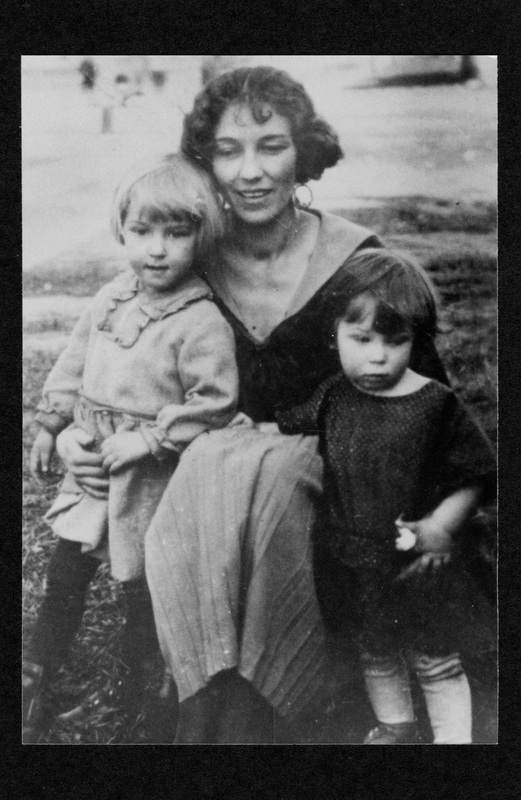
To see a photograph of my mother as a young girl you would not likely question her Indian-ness.  The same applies with increasing certainty to my grandmother, to her father, to his father (the latter I understand to have sported braids and, when astride a horse and under the influence of strong drink which was not unusual, would frighten women and children—and while that story may not be entirely accurate, I hope that it is), and, I trust, on back to a Choctaw woman named Otemansha, peace be upon her.

Picture
My Grandmother, Original Choctaw Enrollee Ruth Adella Foster, with my blond Aunt Sue and my Mother
The Dawes Commission was organized in 1893 to establish a Roll of American Indians residing in Indian Territory between 1899 and 1907.

My late grandmother Ruth Adella Foster is listed Number 15,137 as of March 26, 1904, on the Dawes Commission Rolls as an “Original Enrollee” of the Choctaw Nation of Oklahoma.  As are her father and her two older brothers—her mother is enrolled as an “I.W.” or “Intermarried White.”  My grandmother had a younger brother who was born after the Rolls had closed and so, to his eternal dismay, was not considered an Original Enrollee.  E.A. Foster, Jr., was his name—we knew him as “Uncle Manny”—and he researched exhaustively the Foster family lineage, to wit:

My four-greats grandmother was referred to generally in documents I possess as, “the Choctaw woman, wife of William Foster” in Mississippi.  In a couple of documents of  court proceedings, she is called “O-Te-Man-Sha,” which I presume was a phonetic attempt to spell her Choctaw language name.

Otemansha was of the “Sixtown” Tribe or Clan of Choctaw Indians.  Oklahoma Historian Angie Debo says that “Sixtown Indians, Okla Hannali, spoke a distinctive dialect, tattooed blue marks around their mouths, and were shorter and heavier in build than the other Choctaws.” (Debo, The Rise and Fall of the Choctaw Republic, 1934, p.20)  (I have to smile at Professor Debo’s description—while I’ve not yet tattooed blue marks around my mouth, I do find myself tending toward being heavier the older I get.)

When Andrew Jackson determined that the Southeastern Tribes should be removed from their homelands to what is now Oklahoma, so as to better facilitate the white folks who wanted more land, it was the Choctaw Tribe that was chosen to be the first to go on what they called The Long Sad Walk.  Those upstart Cherokees with their Trail of Tears came later.  I understand that the Choctaws were chosen to be the first removed because they were deemed least likely to protest—they had already begun to assimilate and there were farmers and store-keepers and teachers among them.

There were, to be sure, different levels of assimilation.  I remember one of my uncles telling about how our Choctaw ancestor, Otemansha, had held an important position in the Sixtown Clan back in Mississippi—that she had been a “Bone Picker.”  At the time I didn’t know what a Bone Picker was and I don’t recall that my uncle told me.  Had he done so, I feel certain that as a young boy I would have remembered so gruesome were the duties of that high office in Choctaw culture.  If Otemansha were a “Bone Picker,” she was, indeed, an honored person and would have performed important duties in the funerary practices of her community at the time.  She would likely have had distinctive tattoos that identified her position and her thumb and index fingernails would have been long and thick.  For when a Choctaw Indian died, he or she was wrapped securely in robes and placed upon a wooden scaffold near the house and left to rot for a number of months.  When the appropriate time had passed the “Bone Picker” came and removed what flesh remained on the deceased’s bones by using his or her fingernails.  The bones were then placed in boxes and stored in a “Bone House” until such time as there were enough bones from the community to bury in a mound.  To be sure, I have no real evidence that I am descended from “Bone Pickers”—only a story told by a long deceased uncle.  But I hope the story was true.  I like thinking of this woman without whom I would/could never have been born—I like thinking about her place in her community.


2 Comments

Fly Fishing

3/24/2013

2 Comments

 
Meeting my friend Jeff Arterburn tomorrow morning at the entrance to the Pecos Historical Monument--the old Forked Lightning Ranch that belonged to Tex Austin in the 1920s and then later to the actress Greer Garson and her husband.  One makes reservations with the Park Service and pays $25 to fish a stretch of the Pecos River for the day.  It's supposed to be 11 degrees in the morning--a high of 41.  The river is low.  I suspect I'm too old for this kind of nonsense, but I'm hoping . . .  Got my long-johns laid out, anyway.
2 Comments

Permanent Record

3/23/2013

1 Comment

 
Back when I was in school—and I’m talking here primary and secondary school, not college—I and my fellow scholars were repeatedly warned that poor grades or excessive tardiness or the common practice of chewing gum in class were offences that would go on our “Permanent Records,” and that, once recorded, could never be erased and would follow us throughout our lives and make it difficult, if not impossible, to get decent jobs or bank loans to buy new or even used automobiles.

In short, blemishes on one’s Permanent Record were to be avoided at all costs.  I imagined, at the time, that these documents were stored in yellow-brown manila file folders arranged alphabetically in dark green filing cabinets in the principal’s office and were promptly forwarded whenever an individual changed schools or moved to another town or even another state.  Of course, when one grew up, these no doubt ever-fattening files would be delivered to any prospective employer, college or technical school admissions officer, or military recruiter without those individuals even having to request them.

When I had completed my schooling I don’t remember ever worrying much about where my Permanent Records were kept nor who had access to them.  They were out there and there wasn’t anything I could do about them, now.  For all I knew the whole Permanent Record thing might have ended at some time in the 1960s since the threat from teachers seems not to be a part of later generations’ collective consciousness.  Be that as it may, I believe now that the Permanent Records for my generation were most likely kept in Washington, D.C., and were, in fact, the documents upon which the much-hated J. Edgar Hoover based his infamous files.  And while I have today neither the patience nor the inclination to apply under the Freedom of Information Act to obtain what I imagine would turn out to be a thick and scurrilous copy of my own FBI File, I am of the opinion that all extant Permanent Records are now stored—like nuclear waste—in a huge bunker inside some mountain somewhere in Utah and that the Freedom of Information Act does not apply to those documents.

And so it is for this reason I am hereby confessing to every aberrant activity in which I can recall having engaged (and, yes, there are probably some that I have forgotten ), and making available for the first time to the general reading public, to the best of my recollection, my very own Permanent Record.


1 Comment

Preface to a Twenty-Volume Suicide Note

3/21/2013

4 Comments

 
Tomorrow is my birthday.  I will be 70 years old.  I never thought I'd see 70.  And here it comes . . . my eighth decade.


I've thought a lot about it lately.  The worst thing about growing old, I think, is that the older one gets the more invisible he becomes.  To people in general.  To friends.  To family, even.


Some years ago I wrote a letter to the author James Crumley.  I admired much of his work and wanted to tell him so.  I told him that I'd once seen him sitting alone in a bar in St. Malo, France, and that I'd wanted to speak to him but hadn't.  I'd thought that he looked like he'd just as soon be alone.  When he wrote me back--a long and cordial letter--he allowed as how he'd always had that problem.  He lamented that he had a "gruff" continence and that people thought him surly and unapproachable.  He said that he'd have been very pleased to talk with someone.


It dawned on me then that I had the same problem.  People have always seemed to think that I was/am mad or grumpy--unapproachable.  Once/if they've gotten to know me they often remarked that I'm friendly and often times funny--not grumpy at all.  I'm thinking now that maybe that accounts for the fact that, as a younger man, I was seldom ignored.  If I asked something or voiced my opinion, people responded.  I've lately found that I'm more and more frequently ignored.  Phone calls are not returned.  Email messages are not responded to.  Even snail-mail letters.  In situations where there is discussion going on, my input is rarely sought, and if I manage to voice it, often ignored.  Understand, I'm not whining about this . . . I'm just remarking on it.  Some of my good friends are approaching my age and are suffering the hearing difficulties that attend, so I sometimes write it off as that--they just didn't hear me.  But then, the same goes when I write to them.


Maybe James Crumley and I were kind of scary-looking.  I know we both could look scary, at times, even when we meant to look lovable.  And the scary look probably fades at a certain age--fades and no one's scared, any more.  Crumley died in 2008.  He was 68.  Maybe he hadn't begun to be invisible, yet.  Maybe that's something that doesn't happen until you're 70.


4 Comments
Forward>>
Powered by Create your own unique website with customizable templates.